A technical briefing for South African pork producers, from the Big Dutchman South Africa Pig Department
Strong El Niño Summer
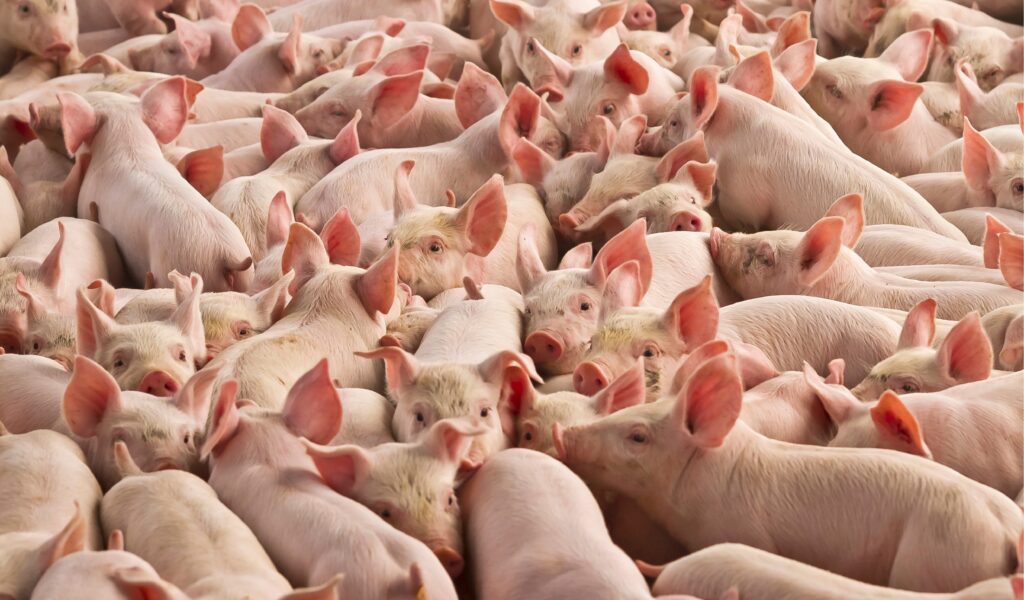
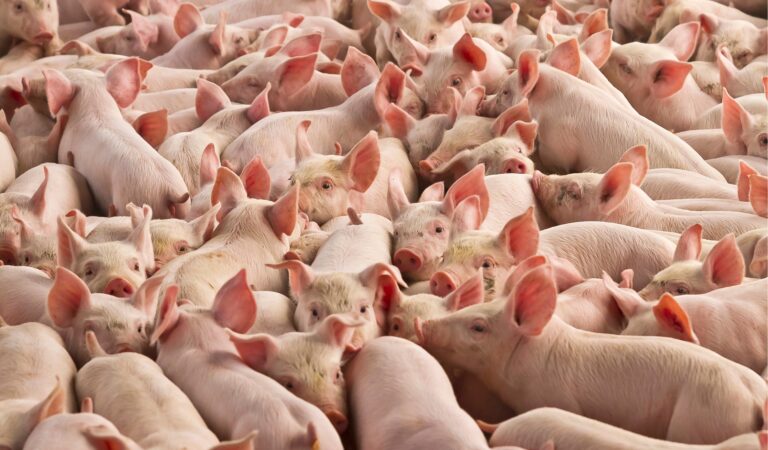
South African pork producers are heading into a summer that the South African Weather Service (SAWS) has flagged as potentially one of the hottest on record. SAWS reports that the 2026/27 El Niño has already reached the threshold of a very strong event, that its October to December outlook favors below-normal rainfall and above-normal temperatures over most of the country, and that heatwaves are likely to become more frequent if the expected dry conditions arrive. SAWS also stresses that uncertainty remains and that not every El Niño ends in drought. For a pig unit, the practical message is simple: plan for heat now and treat any relief as a bonus.
This article explains why heat is so costly in pig production, where the losses show up, and which ventilation, cooling, water and management measures give the best return when temperatures climb.
Why pigs struggle in the heat
Pigs cannot sweat effectively. They rely on panting, on shedding heat to cooler surfaces and moving air, and on wetting their skin so that evaporation can do the work. At the same time, modern lean genetics produce a lot of metabolic heat, especially in lactating sows and fast-growing finishers. When the surrounding air gets close to body temperature, the animal has few options left, and it protects itself by eating less.
That voluntary drop in feed intake is where most of the damage begins. Less feed means less growth, less milk and less reproductive drive, long before any animal looks visibly distressed.
Where heat shows up in your production figures
- Finishers and growers: lower daily feed intake, slower growth, poorer feed conversion, lighter carcasses at the same age and a wider spread in weights across the batch.
- Lactating sows: reduced feed intake, lower milk output, lighter litters at weaning, greater body condition loss and a longer wean-to-service interval.
- Breeding herd: lower conception and farrowing rates, and higher embryo loss in early gestation. This is the familiar summer infertility pattern.
- Boars: heat can reduce semen quality, and the effect appears several weeks after the hot spell. A heatwave in October can therefore surface as poor conception in November and December.
- Piglets: they still need a warm creep area, so the challenge in a farrowing house is cooling the sow without chilling the litter.
A useful habit is to track feed intake, water intake and respiration rate daily through summer. They move before conception and growth figures do, and they give you time to react.
Measure what the pig feels
A thermometer reading at the controller tells you little about conditions at animal level. Aim to measure temperature and relative humidity where the pigs lie and breathe and consider a temperature humidity index rather than temperature alone, because humid heat is far harder on pigs than dry heat. Counting breaths per minute in a few resting animals is a quick, free check. Panting at rest means the building has already lost the battle.
Sensor placement and calibration matter. A sensor sitting in a draught, in direct sun or next to a heat source will give your controller the wrong picture, and every cooling decision that follows will be wrong too.
Step one: get the ventilation fundamentals right
Before adding any cooling equipment, make sure the basic ventilation system is delivering what it was designed to.
- Air speed at animal level is the cheapest cooling you have. Moving air carries heat away from the skin and creates a wind chill effect, which is why tunnel ventilation is so effective in hot weather. Air speed needs to be tuned to the age class, as piglets and weaners are much more sensitive to draughts than finishers and sows.
- Fan performance depends on maintenance. Dust on blades, loose belts, sticking shutters and blocked inlets all reduce real airflow, often by far more than people expect. A fan that is running is not necessarily a fan that is moving its rated air. BD Blue fans are built for efficient, continuous operation, but like any fan they deliver their best performance when cleaned and checked before the hot season.
- Inlets matter as much as outlets. Air must enter evenly and travel across the pigs, not short-circuit along the ceiling. Check inlet openings, leaks and obstructions.
Step two: add evaporative cooling where the climate allows
Evaporative cooling works by turning water into vapor, which absorbs heat from the incoming air. Its potential depends almost entirely on the gap between dry bulb and wet bulb temperature.
- Highveld and other dry regions: on a hot, dry afternoon of about 35°C and 25 percent relative humidity, the wet bulb temperature is roughly 20°C. A well-maintained cooling pad system capturing most of that gap can bring incoming air down by around 10 to 12°C. That is a very large benefit.
- Humid coastal regions: at 32°C and 70 percent relative humidity, the wet bulb is within a few degrees of the dry bulb, so pads may only reduce temperature by 3 to 4°C and add humidity to the building. Here, air speed and targeted cooling carry more of the load, and controls should limit pad operation when humidity climbs too high.
The same principle applies across the country: cooling pad performance depends on pad condition. Scale, algae and dry spots reduce efficiency, so inspect, flush and clean pads and water distribution before the season and keep them clean during it.
Step three: cool the animal directly
For sows in particular, whole-building cooling is not always enough. Targeted cooling, such as drip cooling that wets the neck and shoulder area of the sow, uses very little water and helps the sow lose heat where it matters, without chilling piglets in the creep area. Misting and sprinkling can also help in suitable systems, but should be used with care in humid conditions, where adding moisture can make things worse.
Step four: let the controller do the thinking
A good climate controller turns all of this into a repeatable routine: minimum ventilation in cool weather, stepping up through tunnel mode as temperature rises, activating cooling pads at the right set points, and limiting them when humidity climbs. Check that:
- set points reflect the age and class of pig in each room
- fan stages, pad activation and humidity limits are configured as intended
- temperature and alarm settings will alert you before conditions become critical, ideally to your phone as well as a screen
- sensors are calibrated and correctly placed
Water and feed: the quiet half of heat management
Pigs drink more in hot weather, and water is also the most direct way to help them lose heat internally. Check drinker flow rates, particularly for lactating sows, whose water needs are very high. Insulate or shade water tanks and exposed pipes, because warm water reduces intake. Keep a healthy reserve of storage on site if supply is uncertain in a dry summer.
On the feeding side, work with your nutritionist on diet density for hot weather, and shift feeding toward the cooler hours of the day, so more feed is eaten when the pigs are most willing.
Remember that cooling pads also use water. In a dry year, water security and pad operation need to be planned together, including water quality, which affects scaling and pad life.
Management measures that cost very little
- Review stocking density, because crowded pens trap heat.
- Provide shade for any outdoor or open-sided areas and keep roofs and walls from radiating heat where possible.
- Handle, sort and load pigs in the early morning or evening, never in the midday heat. Transport stress on top of heat stress is a serious risk.
- Keep breeding boars in the coolest part of the farm.
- Walk the units at the hottest time of day regularly. What you see at 14:00 is more useful than any spreadsheet.
A pre-heat checklist for this month
- Clean fans, check belts, shutters and inlets, and confirm every fan is running at its proper capacity.
- Inspect, flush and clean cooling pads and water distribution.
- Calibrate sensors and review controller set points and alarms.
- Test backup power and confirm that fans, controllers and water pumps will stay up if the grid fails.
- Check drinker flow rates and water storage.
- Plan boar and breeding herd management for the weeks after any heatwave.
The bottom line
A very strong El Niño summer is a stress test for every pig unit. Producers who service their ventilation, add the right cooling for their climate and watch their animals closely will protect growth, fertility and margins while others lose ground. Heat losses are quiet and cumulative, so the time to act is before the first heatwave arrives.
The Big Dutchman South Africa Pig Department supports producers with ventilation, cooling and climate control solutions suited to local conditions, from a single house upgrade to a full farm assessment. Contact the Pig Department to discuss how to prepare your units for the season ahead.
Taking Action for future generations.